

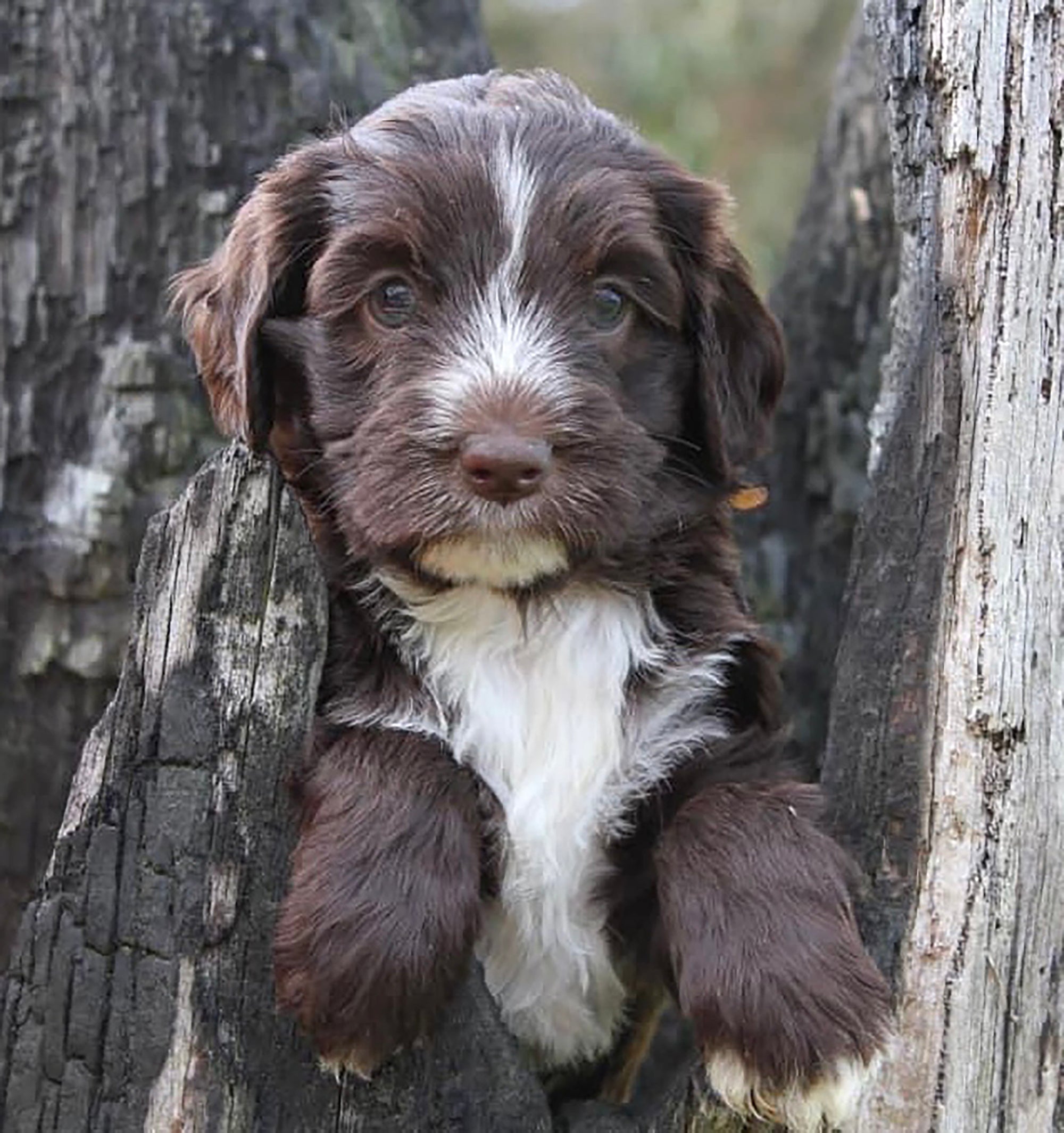
The dog family (Canidae) has been evolving for over 40 million years, and for the first 39.99 million years, it had no contact with humans. What should a puppy eat to get the optimum in nutrition, healthy growth, strength and vitality? Should we ask a Scientist, a veterinarian, or a Pet food manufacturer? a zookeeper or Mother Nature?
In most situations where humanity has altered the natural feeding practices of domesticated animals, health deteriorates, and new diseases emerge, whether it be for reasons of increased growth and production, better condition or speed, convenience, profit, or simply by the nature of domestication and confinement, which prevents natural migration patterns, we see deterioration in health, and the emergence of new diseases. Mother nature, for want of a better name, or Darwin's theory of evolution, has been at work for millions of years evolving genetic traits and structuring every single organism to best survive and thrive in its given environment. The essentials are how to eat, how to survive, and how to reproduce. Dogs are no exception. They have been evolving for over 39.99 million years, eating raw food (prey) and scavenging scraps. And that is exactly what they thrive on!
Nature has a counterpart for every domesticated animal, be it dogs and wolves, cats and lions, horses and zebras, cows and buffaloes, pigs and boars... and in every case, you will find diseases and degenerative conditions that are not prevalent in the wild counterpart. Yes, domesticated animals often live longer due to their protected environments and human care. Still, in almost every situation, they will suffer from diseases that are either not found in the wild or are very rare there. And why? Because in every situation, man has changed their natural diet!
Do wolves suffer from allergies, flea hypersensitivity, gingivitis and gum disease, anal gland blockage, sensitive bowels and food allergy, hip or elbow dysplasia, diabetes, thyroid deficiency, early onset arthritis, autoimmune diseases or the vast array of cancers that are diagnosed in dogs today? No! Why not? Because they eat a natural raw diet, the same diet they have evolved to eat over 40 million years. Their whole body, from teeth, salivary glands, stomach, intestines, organs, and enzymes, has all been finely tuned over 40 million years to process and digest raw food: meats and organs, bones, fur, feathers, insects, plants, fruits and nuts, grasses...fresh today or weeks old, they can handle it all. And they thrive on it. So how different are modern domestic dogs today? ......... about 0.01 %
So, what should a puppy eat to achieve maximum optimal nutrition, health, growth and longevity?
A natural, raw, uncooked, unprocessed, unadulterated diet.
What is a natural diet for a growing puppy?
Natural nutrition starts in the uterus and in the diet of the pregnant bitch. Although you can't always know the parentage of puppies, if you have a choice, try to find a breeder who feeds raw food. The health and vigour of newborn pups is a direct reflection of both diet and genetics. The importance of the bitch's nutritional plane continues through lactation, during which the pups are completely reliant on mum for all their nutrition (growth), immunity (colostrum), and waste disposal for the first few weeks. You can usually pick the strongest pup (often the pick of the litter) at about 2 weeks. At this age, the pup is a direct reflection of his genetic make-up and the bitch's nutritional intake. From the time the pup cuts its first milk teeth (approx. 2-4 weeks old), it is ready to tackle solid food.
This coincides with increasing discomfort at feeding time for the bitch (those nice, sharp teeth we all know so well!), who is stimulated to start offering solid food. In the wild state, she does this by regurgitating food (voluntary vomiting) for the pups to eat. Food (or prey) she may have eaten minutes or hours earlier is then regurgitated, pre-masticated (chewed), warm (38.5 C), and partially digested, for the pups to devour back in the security of the den (or whelping box). Many bitches today will still start vomiting at this stage of lactation, even if you are offering solids already, which are the cause of many a panicky phone call from inexperienced breeders.
And what do the pups then eat? Exactly what has Mum eaten? Pre-chewed, partly digested, raw meat, organs, gut contents, bones, fur, feathers, and any other plant or organic material the bitch has eaten. But remember, the bitch is often eating for herself and 6 or more pups, and as a result, her diet is often more varied and ravenous than usual. In fact, the concept of cravings for certain foods, which are experienced during pregnancy and lactation, may play an important role in ensuring balanced early nutrition for pups and people alike. By 6-8 weeks, the pups will tackle a whole carcass and food brought back by the bitch intact. By the age of 6-8 months old, the pup has grown and learned to hunt and scavenge for itself. So, how does this translate to a modern domestic puppy? Very simply: We try to recreate the core elements of a natural diet using easily accessible, currently available ingredients that provide the equivalent constituents. It is not that complicated or time-consuming, and there is only one Golden Rule:
Do not cook food for your puppy!
The cooking and artificial processing of dog (and cat) foods, which began in the 1950's with the post-war surge in canned foods, is the single most significant impact that man has had on the domestic dog. It represents the most dramatic deviation from nature we have imposed on any domesticated animal. It is intrinsically linked to the rapid decline in health, fertility, and longevity that our "best friends" suffer today.
The nutritional damage caused by cooking is insidious and far-reaching, and too involved to go into in great detail here. As a bare minimum, it damages/destroys essential vitamins, minerals, fatty acids, and trace elements in the diet. It denatures (mutates) proteins, inactivates natural enzymes, and kills all natural bacterial flora (sterilises food). It results in decreased nutritional content, increased digestive effort and enzyme output, poorer absorption and intestinal vitamin production, and greater waste production. This all adds up to a nutritionally deficient diet with reduced bioavailability (harder to digest and absorb) and containing mutated protein fragments that may be absorbed across the bowel. Cooking is a completely unnatural, artificial process and should not be involved in preparing a dog's natural diet.
What are the ingredients for a modern 'natural puppy' diet?
The ingredients in a natural diet vary only slightly from puppy to adulthood. They comprise the four basic food groups: Proteins, fats, carbohydrates, and vegetables. The ratios of these in the diet will vary with the different nutritional requirements of age (stage of growth), metabolism, energy expenditure, exercise levels and reproductive status. A diet based on raw meats (both muscle meats and some organ/offal), bones, mixed cereal, good grains, vegetables and fruits, and a few basic natural supplements to ensure vitamin/ mineral balance, can be adjusted to suit all stages of a dog's nutritional needs. We aim to mimic the omnivorous diet (both animal and vegetable) that wild dogs consume.
The final ingredient is access to raw bones. Bones are a vital ingredient in any dog's diet; they provide for good abrasive dental action, which maintains healthy teeth and gums, they are the best natural source of calcium in a dog's diet, and they provide solid matter for proper stool formation, which aids bowel cleansing and appropriate anal gland function. Bones should be raw, soft enough to be chewed completely, and therefore digested completely, and of a size large enough to prevent swallowing whole.
The ideal puppy bones are raw chicken carcasses or frames. They can be made available as soon as the pups start chewing solids (or soft toys) and can be continued for life to support health, vitality, reproductive vigour, and longevity.
The puppy diet for all breeds
There has always been a lot of discussion about the different needs of large- and small-breed puppies, but with a properly balanced puppy diet, the only differences are the amount you feed and how long you feed it. All pups need small, regular meals during the early stages (the amount is relative to the size of the pups): 4 feeds per day up to 6 weeks old, 3 feeds per day up to 12 weeks, and 2 feeds per day up to 6 months old. Small-breed dogs will reach mature size between 6 and 12 months old and can be fed once a day.
Larger-breed dogs continue to grow and develop until between 12 and 18 months, and giant breeds until 18 months to 2 years, and should be maintained on 2 feeds per day until then. As long as the diet ratios are correct, this is the main difference, along with the individual's own metabolism. The meat should always be raw, preservative-free, and meat-inspected. I prefer kangaroo and rabbit, as they are both free-range and organic, likely natural prey, lean meats (approx. 4% fat), and cost-effective. It is a good idea to add some organ meats on occasion (once or twice a week). A mix of 100g of organ meat to 600g of meat is rich enough. Use liver and kidney primarily, and buy only from a butcher, supermarket, or Pet meat specialist. Try always to have a bone offering (chicken carcass or kangaroo tail bones are fantastic) at least once daily or every second day.


